

ACADEMIC

At Rotorua Boys’ High School, we aim to provide a challenging, varied and dynamic learning environment that is authentic and responsive for all students. Our paramount focus is ensuring that all students achieve their academic potential. We strive for excellence in academic pursuits.

Curriculum

“A thorough approach to curriculum review effectively promotes and supports student learning. A diverse and contextualised curriculum is based on student needs and interests.”

- Education Review Office (ERO)

Rotorua Boys' High School recognises the importance of delivering a curriculum which is tailored to the needs of our community and our students. The school embraces the New Zealand Curriculum as a framework for developing meaningful and effective programmes of learning for our students. Our learning programmes are designed to encourage students to become self-directed learners who take ownership for their own learning and feel encouraged to extend themselves.

The pathways provided for assessment and achievements through NCEA are the basis for curriculum structures in the senior school.

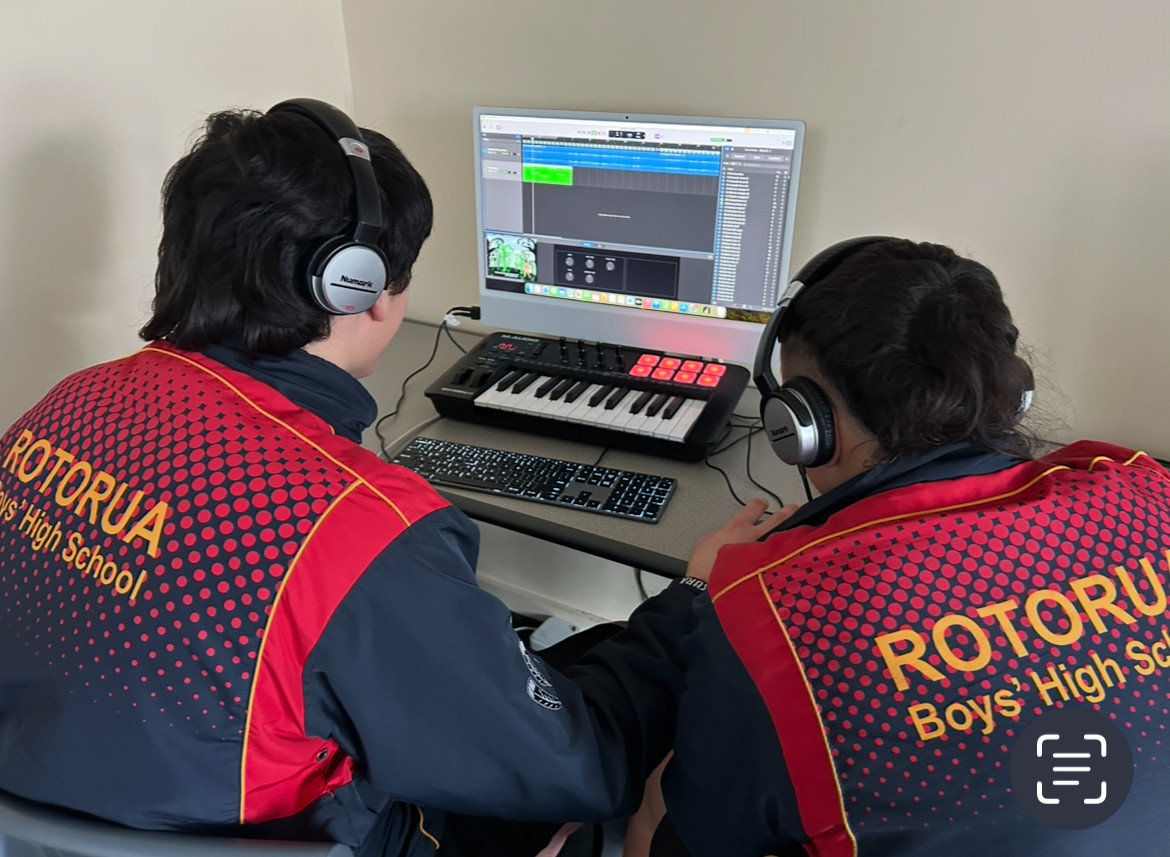
Rotorua Boys’ High School leverage device-based learning to deliver our curriculum in a manner that will improve student engagement and encourage self-directed learning. Parents, families and whānau are able to form stronger connections with our school and their son’s learning. Rotorua Boys’ High School is committed to allowing responsible, learner-centred use of digital devices at our school.
"Overall student achievement in NCEA is well above the national comparisons and averages for similar schools.”   

- Education Review Office (ERO)

Certification Pathways

Rotorua Boys’ High School Certification Pathway:

  • Years 9–10 focus on foundations and habits.
  • Year 11 consolidates academic strength and character before national qualifications.
  • Years 12–13 focus on qualification attainment and pathway readiness.
Year LevelCertificationAcademic FocusCore Skills Being DevelopedValues & Dispositions Focus
Year 9Year 9 CertificateBuilding foundational curriculum knowledge across all subjectsOrganisation, digital fluency, literacy & numeracy foundations, learning routines, self-managementPositive habits, effort, respect, engagement, developing identity as a learner
Year 10Year 10 CertificateStrengthening curriculum depth and preparing for senior pathwaysCritical thinking, subject-specific skill development, consistency, meeting deadlines, academic resilienceResponsibility, reliability, contribution to school life, leadership beginnings
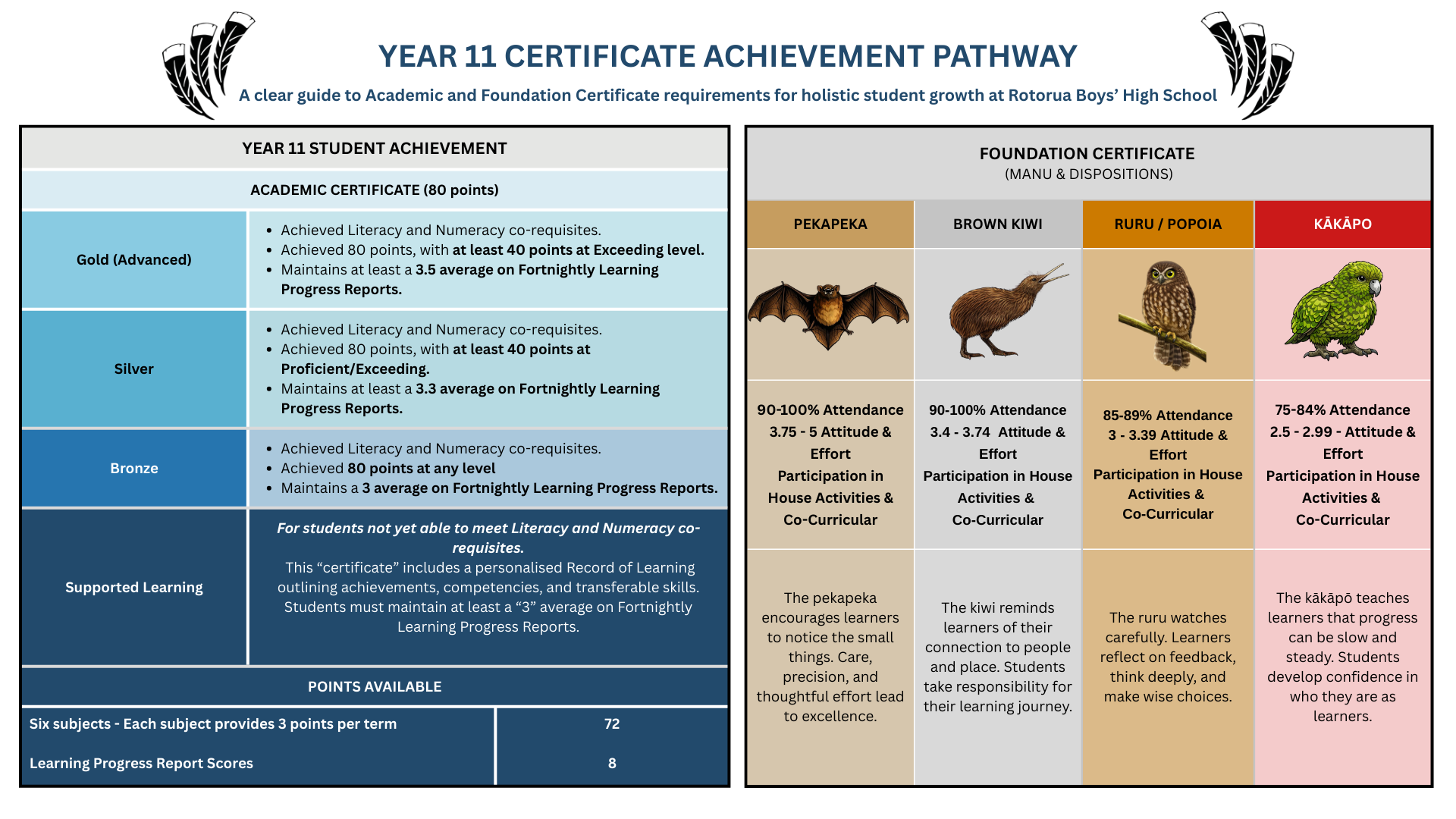
Year 11Super 8 Endorsed Certificate (Academic & Foundation)80-point Academic Certificate across six subjects + Literacy & Numeracy co-requisitesMastery of core knowledge, academic rigour, sustained effort, exam readiness, progress trackingAttendance, attitude & effort benchmarks, participation in house & co-curricular activities, ownership of learning
Year 12NCEA Level 2National qualification with subject pathways aligned to future goalsSpecialisation, independent study, assessment strategy, time management, goal settingAccountability, commitment, pathway clarity (tertiary, trades, employment)
Year 13NCEA Level 3 & University Entrance (where applicable)Advanced subject mastery and pathway completionScholarship readiness, research skills, complex problem solving, leadershipMentorship, service, legacy, readiness for life beyond school​​

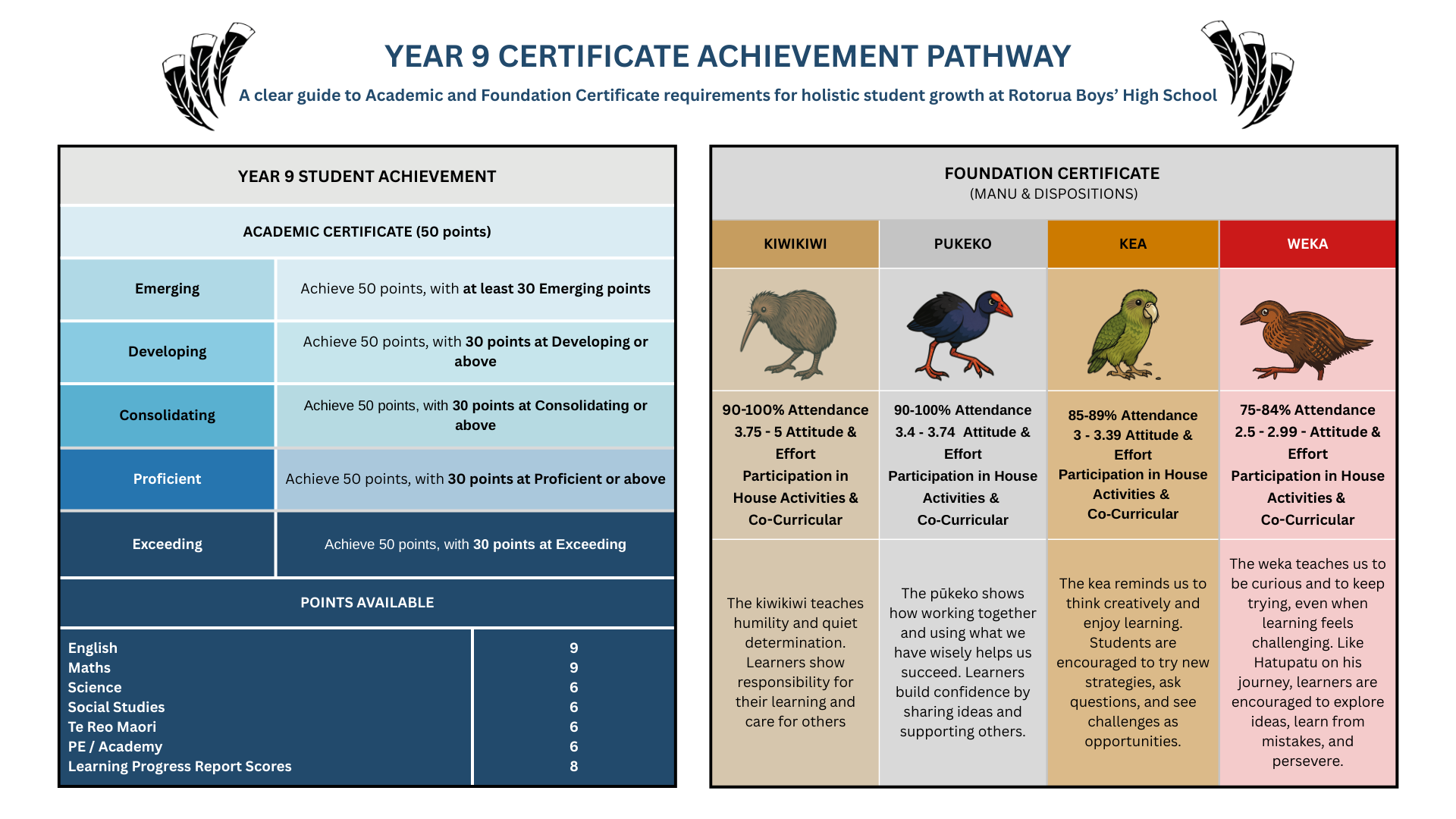
Students in Year 9 work towards their Junior Academic Certificate, and the Foundation / Tāne Raukura Certificate. These certificates recognise students who consistently demonstrate strong effort, positive behaviour, and commitment to learning across all subjects. It celebrates academic progress as well as personal qualities such as responsibility, resilience, and contribution to our school values. Rather than focusing on a single test or result, the certificate reflects a student’s overall attitude, engagement, and growth throughout the year, encouraging them to build strong foundations for success in the senior school.

Year 9 Curriculum

At Year 9 students study Te Reo Māori; Mathematics; English; Social Studies; Science; and Physical Education and Health. In addition, Year 9 students study at least 10 short course subjects to give them a full appreciation of the breadth of curriculum Rotorua Boys’ High School has to offer.

Year 9 short courses: Leadership; Tourism; Raukura Performing Arts; Health; Outdoor Education; Music; Dance; Art; Technology; Food and Nutrition, Digital Technology and Designing Digital Outcomes.


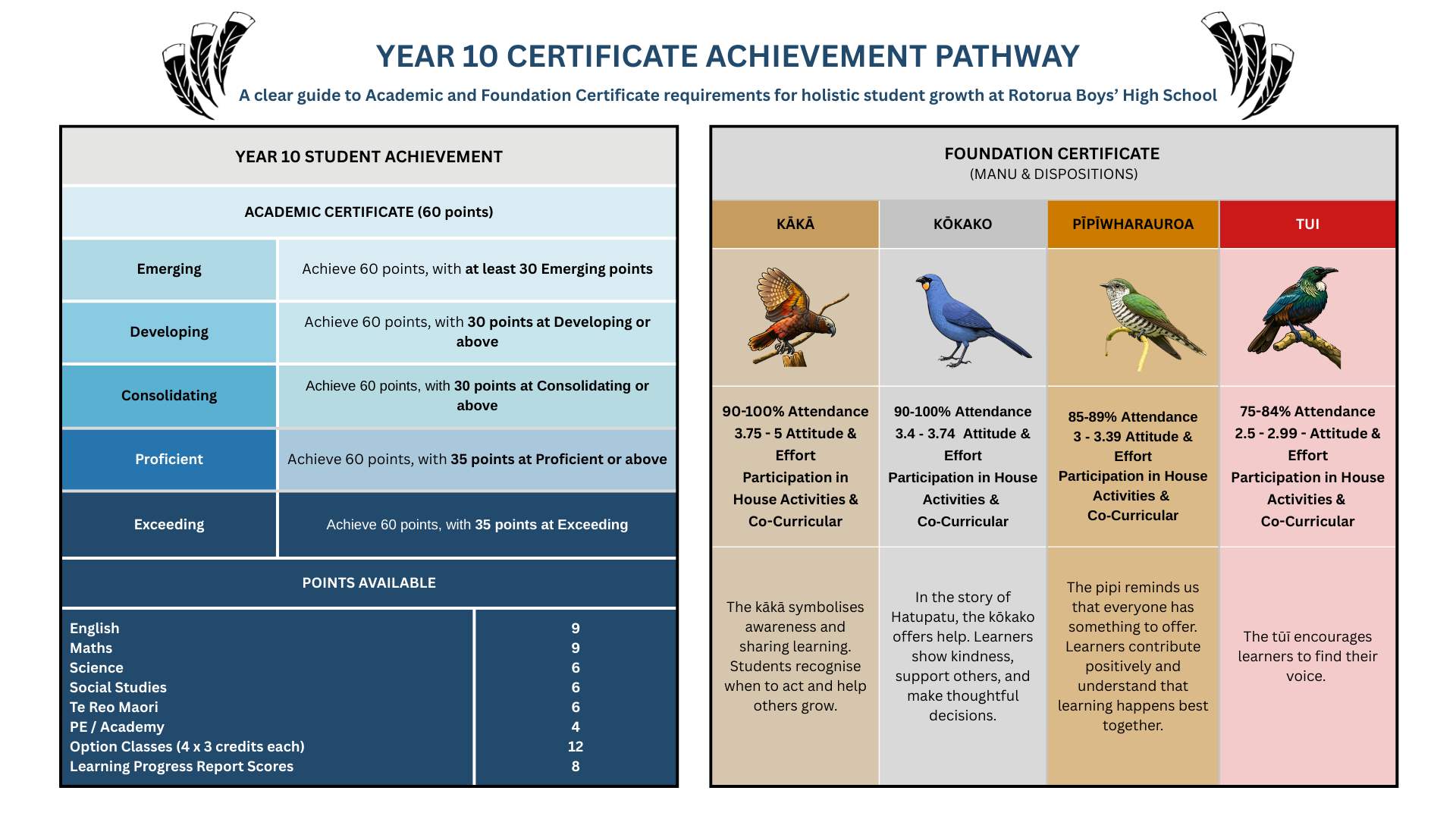
Students in Year 10 work towards their Junior Academic Certificate, and the Foundation / Tāne Raukura Certificate. The Year 10 Certificate recognises students who are consistently preparing themselves for the expectations of senior school. It is awarded to students who demonstrate strong academic progress, sustained effort, positive behaviour, and active contribution to school life. Each component is achieved through clear and measurable actions: academic achievement is based on meeting or exceeding curriculum level expectations across subjects; effort is earned through consistent engagement, meeting deadlines, and completing classwork and homework to a high standard; behaviour is demonstrated through respectful conduct, attendance, and upholding school values; and contribution is achieved through involvement in co-curricular activities, leadership, service, or representing the school. Together, these components reflect a student who is not just capable, but reliable, committed, and ready for the transition into Year 11.

Year 10 Curriculum

At Year 10 students study Te Reo Māori; English; Mathematics; Science; Physical Education & Health; and Social Studies.

In addition, students in Year 10 select four options a year - 2 per semester. 

  • Business Studies
  • Outdoor Education
  • Building
  • Engineering
  • Design and Visual Communication
  • Digital Technology
  • Food Technology
  • Music
  • Māori Carving
  • Visual Art
  • Basketball Academy
  • Football Academy
  • Hockey Academy
  • Rugby Academy


The Year 11 Super 8 Endorsed Certificate recognises students who demonstrate strong academic achievement and the foundations needed for senior success. Instead of completing NCEA Level 1, students work toward an 80-point Academic Certificate built from six subjects across the year, alongside Learning Progress Report scores and the Literacy and Numeracy co-requisites. Gold, Silver, and Bronze levels are awarded based on the number of points earned at higher performance levels and a student’s average progress report score. Alongside this, students achieve a Foundation Certificate (Manu & Dispositions) based on attendance, attitude and effort, and participation in house and co-curricular activities, progressing through Kākāpō, Ruru/Popoia, Brown Kiwi, and PekaPeka levels.

We have moved away from NCEA Level 1 to shift the focus from collecting credits to building strong foundations. Level 1 often encouraged short-term assessment strategies rather than deep learning. The Super 8 Endorsed Certificate allows us to prioritise literacy, numeracy, work habits, attendance, and consistent effort — ensuring students are genuinely prepared for NCEA Level 2, where qualifications carry greater long-term significance.

In Year 11 Te Reo Māori, English, Mathematics and Science are core subjects. Students can also choose two additional subjects.

Year 11 Option Form 2026


In Year 12, students begin to shape their own learning pathway, with English as the only compulsory subject. Alongside this, students select five additional subjects based on their interests, strengths, and future goals. This flexible structure allows students to explore a range of academic, practical, and creative options while building the knowledge and skills needed for success at NCEA Level 2 and beyond.

Download NCEA Level 2 Pathways Guide

2026 Year 12 Option Form

In Year 13, students take full ownership of their learning by selecting six subjects, with no compulsory courses. This flexible structure allows them to specialise in areas aligned with their interests, strengths, and future pathways, whether that be university, trades, or employment. At NCEA Level 3, students are challenged to think critically, work independently, and strive for excellence as they prepare for life beyond school.

Download NCEA Level 3 Pathways Guide

2026 Year 13 Option Form

“The school effectively uses student achievement information to make positive changes to learners’ engagement, progress and achievement.”

- Education Review Office (ERO)

img